



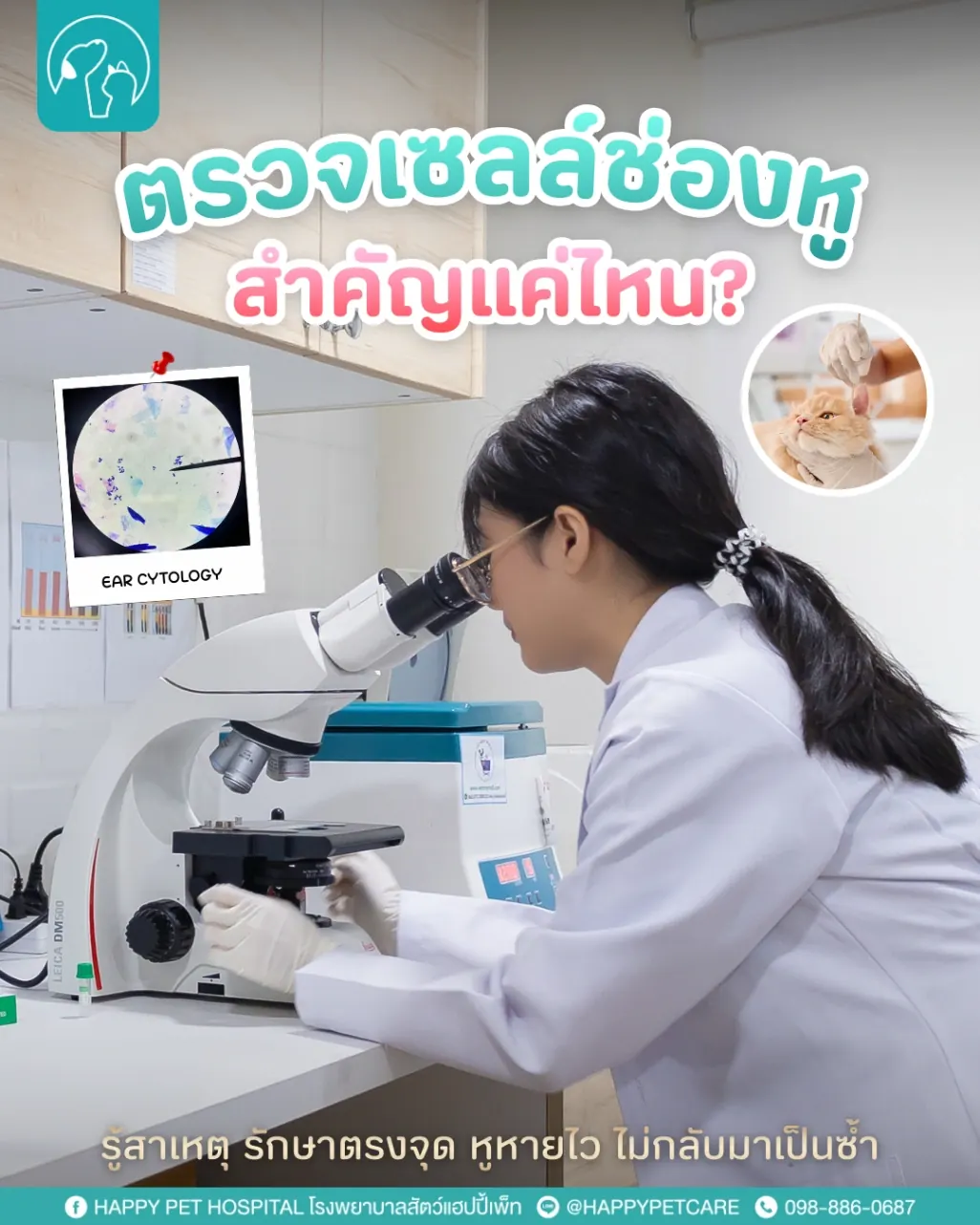
🐱 การตรวจเซลล์ช่องหูในแมว (Ear Cytology)
ทำไมต้องตรวจ? ตรวจอย่างไร? และเมื่อไหร่ควรพามาตรวจ
ปัญหาเกี่ยวกับหูในแมวอาจดูเหมือนเรื่องเล็กน้อย เช่น เกาหูบ่อย หรือมีขี้หูมากขึ้น แต่ในบางกรณี อาจเป็นสัญญาณของการอักเสบ การติดเชื้อ หรือความผิดปกติที่ต้องได้รับการวินิจฉัยอย่างเหมาะสม
หนึ่งในวิธีที่ช่วยวิเคราะห์สาเหตุได้อย่างแม่นยำ คือ การตรวจเซลล์ช่องหู (Ear Cytology)
การตรวจเซลล์ช่องหูคืออะไร?
เป็นการเก็บตัวอย่างสารคัดหลั่งหรือขี้หูจากภายในช่องหู เพื่อนำไปป้ายบนสไลด์ ย้อมสี และตรวจดูภายใต้กล้องจุลทรรศน์
การตรวจนี้ช่วยให้สัตวแพทย์สามารถประเมินได้ว่าภายในช่องหูมีการอักเสบจากอะไร เช่น
การติดเชื้อยีสต์ (เชื้อรา)
การติดเชื้อแบคทีเรีย
การอักเสบจากภูมิแพ้
การระคายเคืองหรือการสะสมของเซลล์อักเสบ
การวินิจฉัยที่ถูกต้อง ช่วยให้เลือกยารักษาได้ตรงจุด ลดโอกาสการดื้อยา และลดการกลับมาเป็นซ้ำ
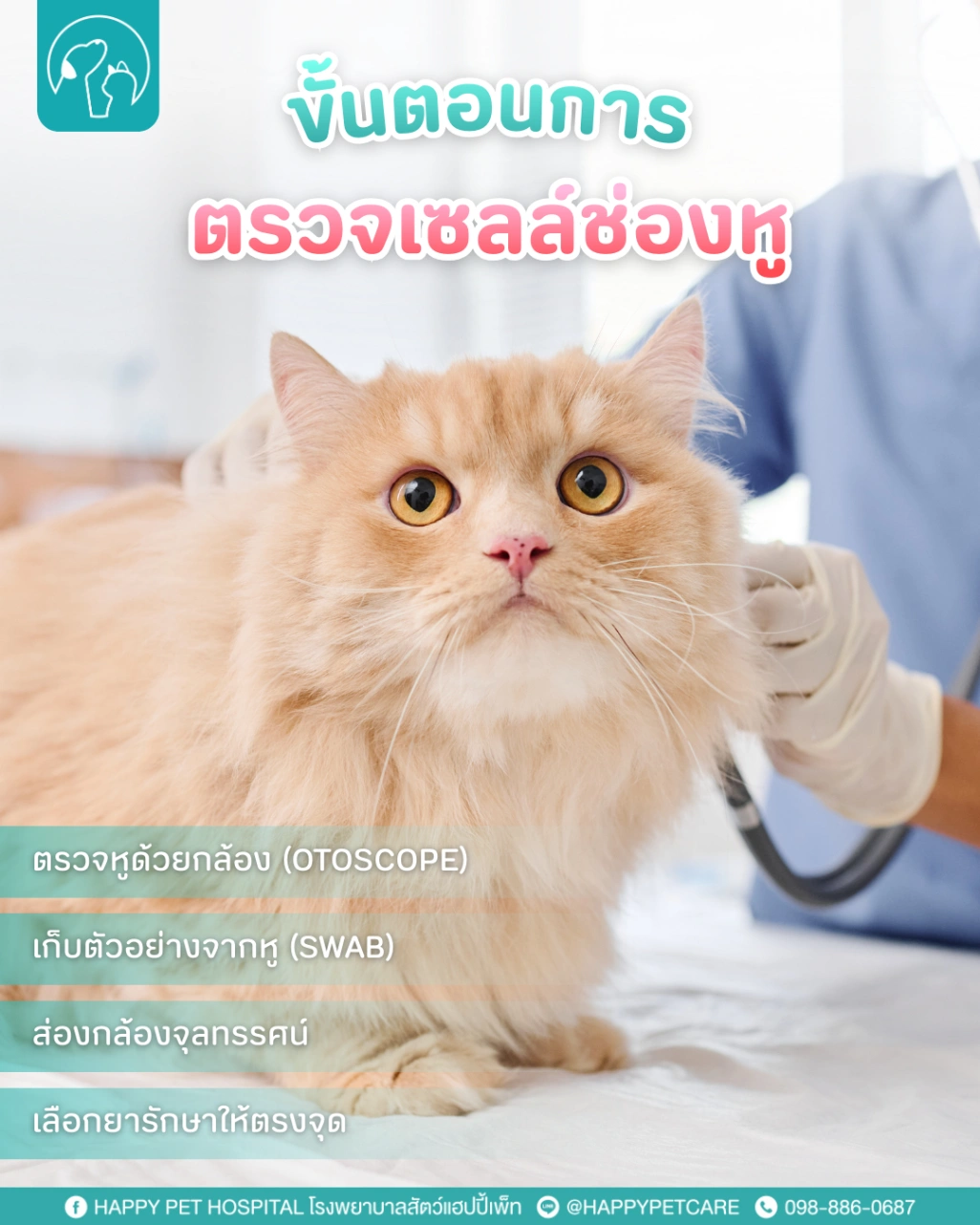
ขั้นตอนการตรวจทำอย่างไร?
ตรวจร่างกายและประเมินภายนอกช่องหู
สัตวแพทย์จะตรวจดูความแดง บวม กลิ่น หรือสิ่งคัดหลั่งเก็บตัวอย่างจากช่องหูอย่างนุ่มนวล
ใช้สำลีหรืออุปกรณ์ปลอดเชื้อเก็บตัวอย่างจากภายในเตรียมสไลด์และย้อมสีตัวอย่าง
เพื่อให้สามารถมองเห็นเซลล์และเชื้อได้ชัดเจนตรวจด้วยกล้องจุลทรรศน์
ประเมินชนิดและปริมาณของเชื้อหรือเซลล์อักเสบ
โดยทั่วไปเป็นขั้นตอนที่รวดเร็ว และไม่ต้องวางยาสลบ ยกเว้นในกรณีที่แมวมีอาการเจ็บมากหรือไม่ให้ความร่วมมือ

สัญญาณที่ควรพาแมวมาตรวจหู
ควรพาน้องแมวมาพบสัตวแพทย์ หากพบอาการต่อไปนี้:
เกาหู หรือเอาเท้าถูหูบ่อยผิดปกติ
สะบัดหัวบ่อย
มีขี้หูมากผิดปกติ สีเข้ม เหลือง หรือมีกลิ่นแรง
ช่องหูแดง บวม หรือเจ็บเมื่อสัมผัส
มีพฤติกรรมซึม ไม่สบายตัว
การปล่อยให้การอักเสบเรื้อรัง อาจทำให้ผนังช่องหูหนาขึ้น และรักษายากมากขึ้นในอนาคต
ทำไมการตรวจจึงสำคัญ?
การรักษาโรคหูโดยไม่ตรวจเซลล์ อาจทำให้ใช้ยาผิดประเภท เช่น ใช้ยาฆ่าแบคทีเรียในกรณีที่เป็นเชื้อรา หรือในทางกลับกัน
การตรวจเซลล์ช่องหูจึงเป็นเครื่องมือสำคัญ ที่ช่วยให้การรักษามีประสิทธิภาพ ปลอดภัย และลดโอกาสกลับมาเป็นซ้ำ
หากเจ้าของสังเกตว่าน้องแมวมีความผิดปกติเกี่ยวกับหู แนะนำให้พามาตรวจเพื่อวินิจฉัยอย่างเหมาะสมตั้งแต่ระยะแรก
🐱 Ear Cytology in Cats
Ear problems in cats may start with small signs such as frequent scratching or increased ear discharge.
However, these can sometimes indicate inflammation or infection that requires proper diagnosis.
One of the most accurate diagnostic methods is Ear Cytology.
What is Ear Cytology?
Ear cytology is a diagnostic test in which a sample of ear discharge is collected from the ear canal, placed on a slide, stained, and examined under a microscope.
This allows veterinarians to determine whether the inflammation is caused by:
Yeast infection (fungal organisms)
Bacterial infection
Allergic inflammation
Irritation or inflammatory cell accumulation
✅ Accurate diagnosis
✅ Targeted treatment selection
✅ Reduced risk of antibiotic resistance
✅ Lower chance of recurrence
How is the procedure performed?
1️⃣ Physical examination of the ear
The veterinarian checks for redness, swelling, odor, or discharge.
2️⃣ Gentle sample collection
A sterile swab is used to collect material from the ear canal.
3️⃣ Slide preparation and staining
The sample is stained to clearly visualize cells and microorganisms.
4️⃣ Microscopic examination
The type and quantity of organisms or inflammatory cells are evaluated.
The procedure is generally quick and does not require sedation,
except in cases where the cat is very painful or uncooperative.
When should you bring your cat for an ear check?
You should consult a veterinarian if you notice:
Frequent ear scratching
Repeated head shaking
Excessive discharge (dark, yellow, or foul-smelling)
Redness, swelling, or pain when touched
Lethargy or signs of discomfort
⚠ Chronic untreated inflammation can lead to thickening of the ear canal and make treatment more difficult in the future.
Why is ear cytology important?
Treating ear disease without cytology may result in using the wrong medication,
such as prescribing antibiotics for a fungal infection, or vice versa.
Ear cytology is therefore an essential tool to ensure effective, safe treatment and to reduce recurrence.
If you notice any abnormalities in your cat’s ears, early examination is strongly recommended —
because an accurate diagnosis is the foundation of effective treatment.