

โรคกระดูกสะบ้าเคลื่อนในสุนัขพันธุ์เล็ก



โรคกระดูกสะบ้าเคลื่อน (Patellar Luxation) เป็นภาวะที่พบได้บ่อยในสุนัขพันธุ์เล็ก เกิดจากกระดูกสะบ้า (Patella) เคลื่อนหลุดออกจากร่องกระดูกต้นขา ซึ่งตามปกติควรอยู่ในตำแหน่งที่มั่นคงและเคลื่อนขึ้น–ลงตามจังหวะการงอและเหยียดขา
เมื่อสะบ้าเคลื่อนออกจากตำแหน่ง จะส่งผลให้สุนัขมีอาการเดินผิดปกติ ขาอ่อนแรง หรือบางครั้งยกขาข้างหนึ่งลอยขณะเดิน

โดยส่วนใหญ่มีสาเหตุจากพันธุกรรม และสามารถพบได้ตั้งแต่อายุน้อย โดยเฉพาะในสายพันธุ์เล็ก เช่น Pomeranian, Chihuahua, Pekingese, Toy Poodle, Maltese และ Shih Tzu
ในบางกรณีอาจเกิดจากการกระแทกหรืออุบัติเหตุภายหลังได้เช่นกัน

ระดับความรุนแรงของโรค
โรคกระดูกสะบ้าเคลื่อนแบ่งได้เป็น 4 ระดับ
ระดับ 1 : สะบ้าเคลื่อนออกได้เล็กน้อย แต่สามารถกลับเข้าที่เอง มักยังไม่แสดงอาการชัดเจน
ระดับ 2 : สะบ้าเคลื่อนบ่อยขึ้น เริ่มมีอาการเจ็บหรือเดินกะเผลก หากปล่อยไว้อาจนำไปสู่ข้อเข่าเสื่อม
ระดับ 3 : สะบ้าเคลื่อนเกือบตลอดเวลา เหยียดขาได้ไม่สุด และเริ่มลงน้ำหนักไม่ได้ดี
ระดับ 4 : สะบ้าหลุดถาวร ไม่สามารถดันกลับได้ มีความผิดรูปของกระดูก และสุนัขมักไม่ใช้ขาข้างนั้น

แนวทางการรักษา
การรักษาขึ้นอยู่กับระดับความรุนแรงของโรค กรณีอาการไม่รุนแรง สามารถดูแลแบบไม่ผ่าตัด ได้แก่
ควบคุมน้ำหนักให้อยู่ในเกณฑ์มาตรฐาน
ปรับกิจกรรมการออกกำลังกาย
ทำกายภาพบำบัด เช่น เลเซอร์บำบัด ว่ายน้ำ หรือเดินสายพานใต้น้ำ เพื่อเสริมสร้างกล้ามเนื้อรอบข้อเข่าให้แข็งแรงขึ้น
กรณีอาการรุนแรง
จำเป็นต้องรักษาด้วยการผ่าตัด เพื่อจัดตำแหน่งสะบ้าให้กลับเข้าสู่ร่องกระดูกอย่างเหมาะสม บางรายอาจต้องปรับแต่งโครงสร้างกระดูกหรือเสริมเอ็นร่วมด้วย และควรทำกายภาพบำบัดต่อเนื่องหลังผ่าตัดเพื่อฟื้นฟูการใช้งานขา
การป้องกันและการดูแลระยะยาว
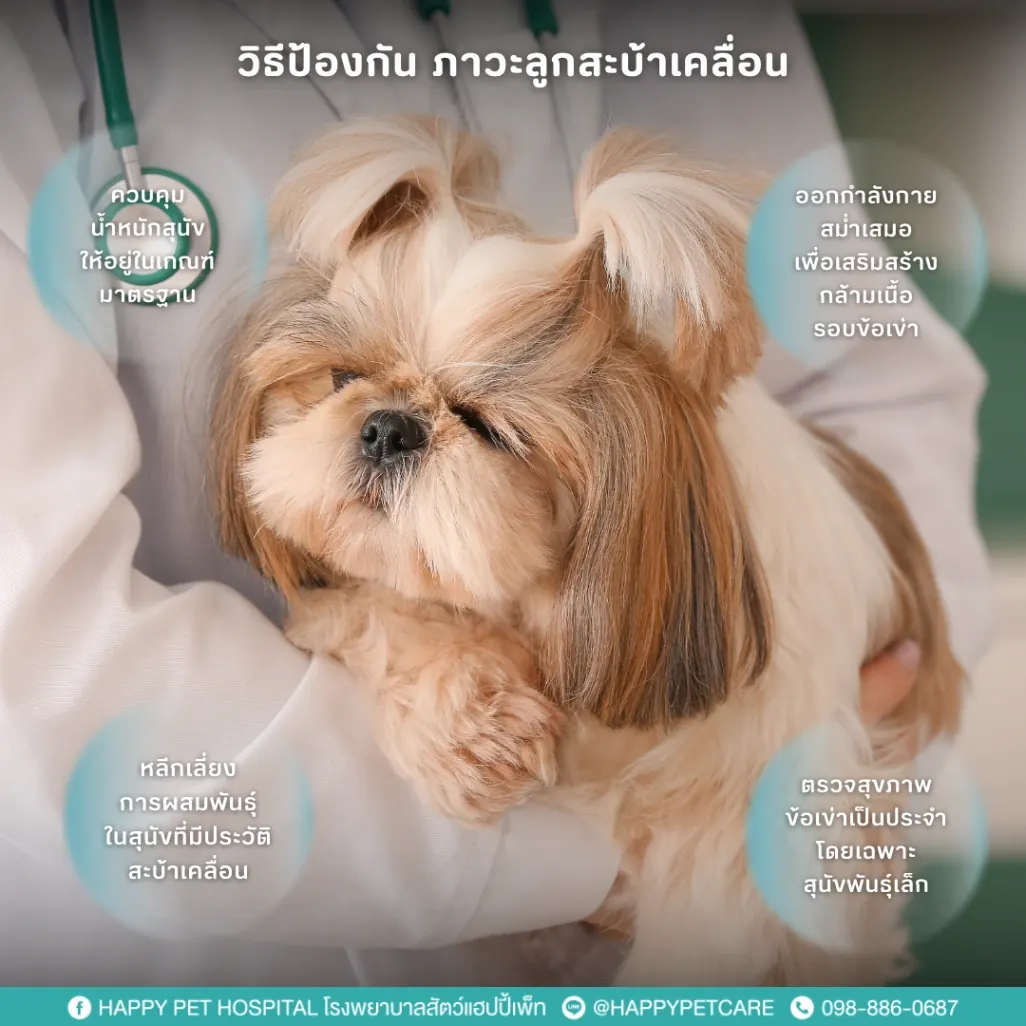
แม้โรคนี้จะมีปัจจัยทางพันธุกรรมเป็นหลัก แต่สามารถลดความรุนแรงได้ด้วยการ
ควบคุมน้ำหนักไม่ให้เกินมาตรฐาน
ออกกำลังกายอย่างเหมาะสมเพื่อเสริมกล้ามเนื้อ
หลีกเลี่ยงการผสมพันธุ์สุนัขที่มีประวัติโรคนี้
ตรวจสุขภาพข้อเข่าเป็นประจำ โดยเฉพาะในสุนัขพันธุ์เล็ก
การสังเกตอาการตั้งแต่ระยะเริ่มต้น และเข้ารับการประเมินโดยสัตวแพทย์ จะช่วยลดภาวะแทรกซ้อนและป้องกันการเสื่อมของข้อเข่าในระยะยาวได้
.
Patellar Luxation is a common condition in small-breed dogs. It occurs when the kneecap (patella) slips out of its normal position within the groove of the thigh bone. Under normal conditions, the patella should remain stable and move smoothly as the leg bends and extends.
When the patella dislocates, it can cause abnormal gait, leg weakness, or sometimes intermittent skipping or lifting of one hind leg while walking.
The condition is most often hereditary and can be found from a young age, especially in small breeds such as Pomeranian, Chihuahua, Pekingese, Toy Poodle, Maltese, and Shih Tzu.
In some cases, it may also result from trauma or injury.
Severity Grades
Patellar luxation is classified into four grades:
Grade 1: The patella can be manually luxated but returns to its normal position on its own. Clinical signs are usually minimal or absent.
Grade 2: The patella luxates more frequently. Mild pain or intermittent limping may occur. If left untreated, it can lead to knee arthritis.
Grade 3: The patella is luxated most of the time. The dog may have difficulty fully extending the leg and reduced weight-bearing ability.
Grade 4: The patella is permanently luxated and cannot be repositioned manually. Bone deformities are often present, and the dog typically does not use the affected leg.
Treatment Options
Treatment depends on the severity of the condition.
Mild cases (non-surgical management):
Maintain a healthy body weight
Modify exercise activities
Physical rehabilitation, such as laser therapy, swimming, or underwater treadmill therapy These approaches help strengthen the muscles surrounding the knee joint.
Severe cases (surgical treatment):
Surgery is required to reposition the patella into the correct groove. Some cases may also require bone reconstruction or ligament correction. Post-operative physical therapy is recommended to restore proper limb function.
Prevention and Long-Term Care
Although genetics play a major role, the severity can be minimized by:
Maintaining an ideal body weight
Providing appropriate exercise to strengthen muscles
Avoiding breeding dogs with a history of this condition
Scheduling regular knee examinations, especially for small-breed dogs
Early detection and evaluation by a veterinarian can help reduce complications and prevent long-term joint degeneration.